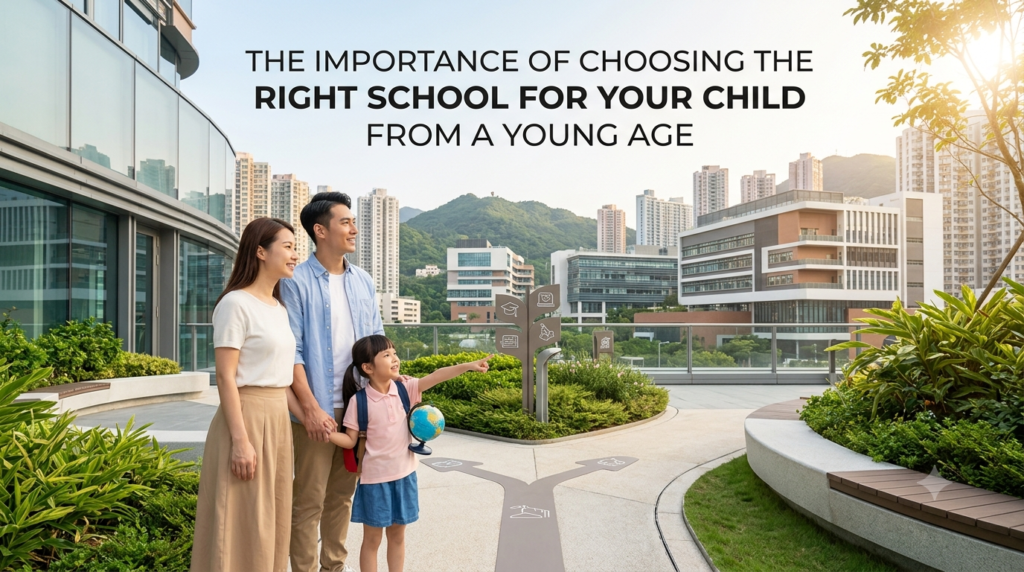
Recently, a parent asked us a fair question: “How do we choose the right pathway for our child?” From our experience, one of the most important foundations is early language learning. In Hong Kong, this often means giving children strong exposure to Cantonese and Mandarin from a young age, alongside English where possible.
Many families start by choosing well-known local or bilingual kindergartens such as Kiangsu Chekiang Preschool, Pods, St Catherine’s Kindergarten, Braemar Hill Nursery and others. These schools are known for strong Chinese programmes and often feed into tier-one primary schools like Diocesan Boys’ School, Diocesan Girls’ School, La Salle, Maryknoll, and Wah Yan College. This can be an excellent way to build a solid Chinese language foundation, but it also raises an important question: how do we move back into an international school context later on?
A child studying at a local kindergarten can still apply to international schools at key entry points such as Year 1 or Year 7, and sometimes into Year 3 or Year 4 depending on availability. When planning this, there are several important considerations:
- Passport and quotas: Many international and private schools are required to maintain a high proportion of students with foreign passports. Once they reach their quota for local passport holders, new applicants may be moved onto a waitlist.
- Developmental readiness: It is important to check that your child is developmentally ready for the next school stage. For example, a typical 5-year-old should be able to engage with a teacher while being read to and have basic number sense, such as counting up to 20.
- English exposure: In a Cantonese-speaking family, parents may need to create extra English exposure through playdates, activities like Tiny Tots, or classes such as swimming or music conducted in English.
Choosing an international school is not just about the brand name. One case that comes to mind is a child we placed into a well-known international school where he struggled, experienced bullying, and was miserable. With his parents’ support, we moved him to another international school that better matched his personality and needs, and he is now flourishing.
On the other hand, some parents prefer to start their child in an international school from the very beginning and continue through to Year 13. These students are often in predominantly English-speaking environments and may not become fully fluent in Cantonese, although they can usually communicate. How much Chinese they maintain depends heavily on the home environment, and some families choose extra tutorials outside school to support language skills.
Ultimately, there is no single “right” pathway. Every family has its own set of priorities. What matters most is that parents visit schools in person, understand the culture and expectations, and have a clear strategy — whether that means staying local in the early years and switching later, or starting in an international school from the outset.
If you feel lost or confused, or simply want help navigating the complex Hong Kong international school system, SEA can help. DM us to start a conversation about your child’s educational pathway.