
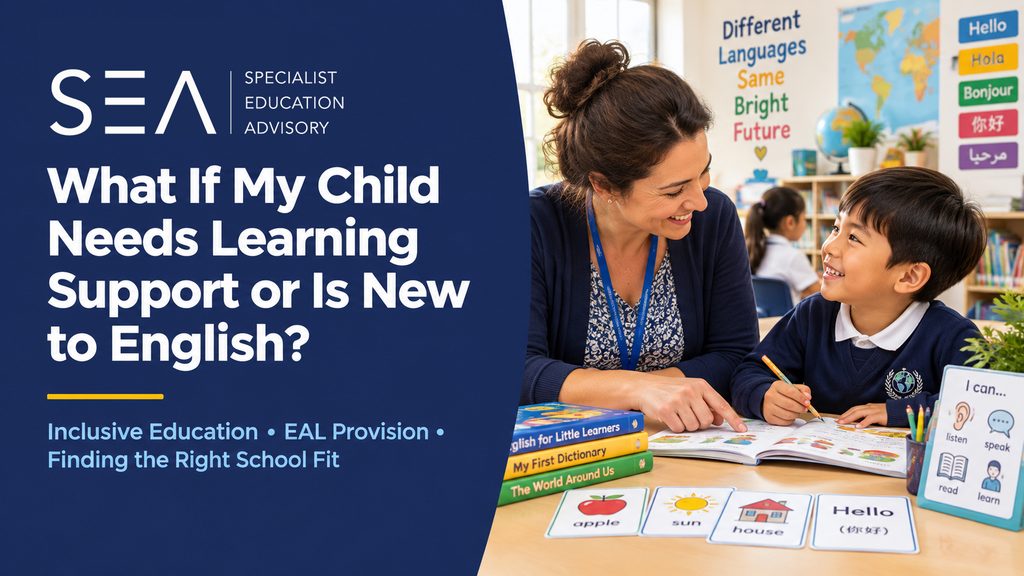
Choosing an international school can feel especially daunting when your child has additional learning needs or is still developing confidence in English. The key is to be open, realistic and proactive. The right school is one that understands your child’s individual profile and can provide meaningful support—not simply one with the best-known name.
Every child learns differently. A diagnosis, learning difference, or need for additional support does not define a child’s potential. With the right environment, appropriate adjustments, and strong collaboration between home and school, children can thrive academically, socially and emotionally.
Be Transparent From the Start
Parents sometimes worry that disclosing an additional learning need may affect their child’s application. However, honesty and transparency are essential. Schools need accurate information in order to decide whether they can support a child appropriately and sustainably.
When applying, be prepared to share relevant information about your child’s learning, development, behaviour, communication, emotional wellbeing, and any support they currently receive. This may include information relating to ADHD, autism, dyslexia, dyspraxia, speech and language needs, anxiety, executive-function difficulties, or other learning differences.
Many schools will ask whether your child has had a psycho-educational assessment or whether there is a current report from an educational psychologist, psychologist, speech therapist, occupational therapist, or another relevant professional.
A good report should help a school understand more than a diagnosis. It may identify your child’s strengths, learning profile, areas of challenge, and practical recommendations for classroom support. Being open allows the admissions and learning-support teams to assess whether they have the capacity, expertise and resources to support your child well.
Understanding Psycho-Educational Reports
A psycho-educational assessment is not about labelling a child. It is a structured way to better understand how a child learns, where they may need support, and what strategies may help them succeed at school.
The process may include:
- A parent interview and discussion of the child’s developmental history.
- A review of previous school reports, teacher feedback, and relevant medical or therapy information.
- One-to-one assessment sessions with a qualified educational psychologist.
- Standardised testing appropriate to the child’s age and individual needs.
- Classroom observation or consultation with the child’s current school, where appropriate.
- A feedback meeting with parents.
- A written report with recommendations for home and school.
Depending on the reason for referral, an assessment may consider cognitive ability, literacy, numeracy, attention, processing speed, memory, executive functioning, behaviour, emotional wellbeing, language, communication, and adaptive skills.
The report can help parents and schools identify suitable classroom strategies, personalised learning goals, enrichment opportunities, and practical support arrangements.
Hong Kong has a range of providers offering child-development, psychological and psycho-educational services. Families may wish to research providers such as Childpsych, The Jadis Blurton Family Development Centre, SPOT, Watchdog, and the Child Development Centre. Before booking an assessment, check the professional’s registration, experience with your child’s age group and learning profile, assessment language, estimated report turnaround time, and whether a prospective school has any specific documentation requirements.
Questions to Ask Schools
Not all international schools offer the same level of learning-support provision. A school may have an excellent reputation but limited capacity in a particular year group, classroom, or programme.
Ask clear questions before applying or accepting an offer:
- What types of learning needs can the school support?
- Does the school have a dedicated learning-support, student-support, or inclusion team?
- What information does the school require during the admissions process?
- Will the school review an existing psycho-educational report?
- Is there a separate learning-support assessment, meeting, or interview?
- What is the teacher-to-student ratio in the relevant class?
- Are education assistants, teaching assistants, or one-to-one support available?
- Can a child receive individual, small-group, or in-class support?
- Does the school create Individual Education Plans or personalised learning plans?
- How do classroom teachers, parents, therapists, and learning-support staff communicate?
- Is additional learning support included in tuition fees, or is it charged separately?
- Does the school currently have capacity to support your child at this entry point?
It is also important to ask about inclusion in everyday school life. Effective support should not focus only on academic work. Children should also be supported to take part in classroom routines, friendships, extracurricular activities, school trips, and the wider school community.
English as an Additional Language
The same principle of transparency applies when a child is new to English or does not speak English at home.
Many Hong Kong international schools use English as their main language of instruction. Bilingual schools may teach English and Mandarin simultaneously, although the balance can vary. Some programs may have a stronger Mandarin focus in the primary years—for example, a 70:30 Mandarin-to-English model—before moving towards a more balanced 50:50 model in secondary school.
Parents should tell the school about their child’s home language, previous language of instruction, confidence speaking English, reading and writing ability, and exposure to English outside school. This helps the admissions team determine whether English as an Additional Language, or EAL, support may be needed.
Ask each school:
- How will my child’s English-language ability be assessed?
- Does the school provide EAL support at this year level?
- Is EAL support delivered in the classroom, in a small group, or through separate sessions?
- Who provides the support: the classroom teacher, a specialist EAL teacher, or a learning-support teacher?
- How often will my child receive support?
- How is English-language progress monitored and shared with parents?
- How does the school help EAL students participate in mainstream lessons?
- Is EAL support temporary, ongoing, or reviewed each year?
- Are there additional fees for EAL provision?
- How does the school communicate with families who may also be new to an English-speaking school environment?
EAL provision varies considerably between international schools. Some have specialist teachers and structured small-group programmes, while others provide more limited support within the mainstream classroom. Parents should not rely solely on a school saying, “We provide EAL support.” Instead, ask for concrete examples of what support looks like day to day.
A Strengths-Based Approach
A child who learns at a different pace, receives therapy, or benefits from an education assistant is not less capable than other children. Every child has different strengths, challenges, interests, and ways of processing information.
The aim is not to find a school that expects every child to learn in exactly the same way. It is to find a school that understands your child, communicates honestly with your family, and can put appropriate, practical support in place.
For example, a child with ADHD may benefit from clear routines, movement breaks, short instructions, visual reminders, and regular teacher-parent communication. A child who is new to English may benefit from visual scaffolds, a peer buddy, pre-teaching of key vocabulary, and time to gain confidence before taking part fully in class discussions.
Early and honest conversations with prospective schools give children the best possible chance of a successful transition.
How SEA Can Help
Before applying, parents should gather relevant reports, speak openly with prospective schools, and compare the support that each school can realistically provide. It is better to identify a suitable and supportive environment early than to accept an offer without first understanding whether your child’s needs can be met.
If you would like an education adviser to help assess your child’s school readiness and review suitable international-school options, contact SEA today.